
When Parents First Notice Something Different: Understanding Autism and Finding the Right Support : Autism Therapy in Patna
It Often Starts With a Small Observation
Sometimes it begins with something that seems very small.
A mother calls her child’s name, but there is no response.
A father notices that his child prefers playing alone.
Maybe the child has started using a few words, but then stops using them. Or perhaps the child understands what is being said but finds it difficult to express what they want.
At first, parents may not think much about it.
They may hear, “Give the child some more time.”
And sometimes children do simply develop at their own pace.
But when the same concerns keep appearing, parents naturally start asking questions.
“Is this normal?”
“Why is my child behaving differently?”
“Should we wait, or should we talk to someone?”
These aren’t easy questions for a parent.
Autism Doesn’t Look the Same in Every Child
One of the biggest misunderstandings about autism is that every child will show the same signs.
That’s not how it works.
One child may have difficulty with spoken communication. Another may speak quite well but struggle with social interaction. Some children may become uncomfortable when their routine changes, while others may show repetitive behaviours or have unusual sensitivities to sounds, touch or their surroundings.
This is why comparing one child with another rarely gives parents a clear answer.
A child’s individual behaviour, communication and development need to be understood in context.
Autism Therapy in Patna
Parents Usually Notice More Than They Realise
Parents spend hours with their children every day.
They know how their child normally behaves, what makes them happy, what upsets them and how they communicate their needs.
So when a parent says, “Something feels different,” that observation deserves to be heard.
It doesn’t automatically mean the child has autism.
It simply means there may be a reason to look a little more closely.
Waiting Can Sometimes Create More Questions
Many families spend months wondering whether their concerns are serious enough to discuss with a professional.
There is no need to feel embarrassed about asking.
Getting an evaluation doesn’t mean putting a label on a child. It can simply help parents understand what their child may need and what kind of support could be useful.
For some families, that clarity itself brings a sense of relief.
The Goal Is to Understand the Child, Not Just the Diagnosis
When parents hear the word autism, they often immediately start worrying about the future.
That’s understandable.
But the first step should be much simpler:
Understand the child in front of you.
What can they already do?
How do they communicate?
What activities do they enjoy?
Where do they need additional support?
These questions can be much more useful than comparing them with another child.
And that’s where the right professional guidance can make a difference.

What Does Autism Support Actually Look Like?
Once parents understand that their child may need some additional support, the next question usually comes very quickly:
“Ab hum kya karein?”
This is where things can become confusing.
There are different kinds of therapies, different opinions and plenty of information available online. Sometimes parents read so much that they end up feeling even more unsure than before.
The important thing is not to choose a therapy simply because someone says it worked for another child.
First understand your own child’s needs.
A child who struggles mainly with speech may need a different kind of support from a child who has difficulty with communication, attention, sensory experiences or social interaction.
Speech Is Not the Only Way Children Communicate
When a child isn’t speaking, parents naturally focus on words.
“When will my child start talking?”
It’s an understandable question.
But communication is much bigger than spoken language.
A child may communicate by pointing, looking, making sounds, using gestures or taking an adult towards something they want.
These small attempts are important too.
Speech therapy can help children develop communication skills according to their individual needs, while also helping parents understand how to encourage communication during everyday activities.
Therapy Shouldn’t Feel Like a Race
Every parent wants to see progress.
That’s completely natural.
But development doesn’t always happen in a straight line.
There may be days when a child participates really well and other days when they simply don’t want to cooperate. A new skill may appear slowly, disappear for a while and then come back again.
Parents can sometimes feel discouraged when this happens.
It doesn’t necessarily mean that nothing is working.
Children have good days and difficult days, just like adults do.
What matters is looking at the overall journey rather than judging progress from a single session.
Parents Have an Important Role Outside the Therapy Room
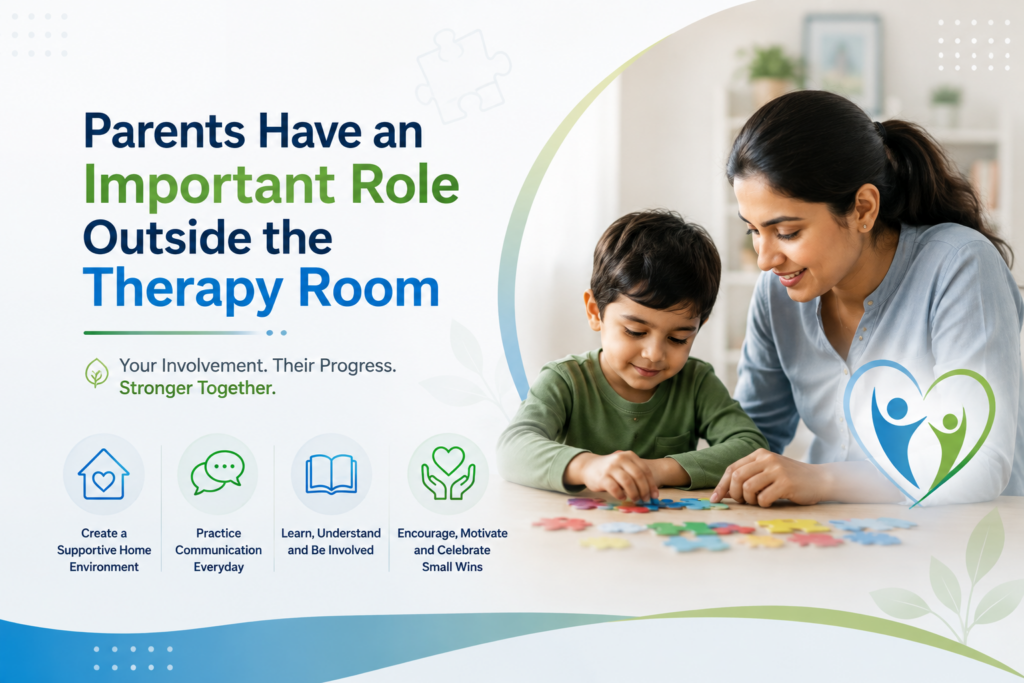
A therapy session may last for a limited amount of time.
Life at home doesn’t.
That’s why parents can become an important part of the learning process.
Simple things such as talking during meals, encouraging a child to make choices, playing together or giving them opportunities to communicate can become useful everyday moments.
It doesn’t have to feel like another class at home.
Sometimes, the best opportunities come from ordinary things.
A favourite toy.
A snack.
Getting dressed.
Going outside.
These everyday situations can give a child a reason to communicate and interact.
Progress Can Be Very Small at First
Parents sometimes expect the first sign of progress to be a new word.
It can be.
But it might also be something much smaller.
Maybe the child starts responding more often when their name is called.
Maybe they begin pointing towards something they want.
Maybe they sit with someone for a little longer than before.
For another family, progress might look completely different.
These moments may seem small to someone watching from outside, but parents know how meaningful they can be.
And sometimes, those small steps are what keep a family hopeful and patient.
Finding the Right Support Can Take Time ! Autism Therapy in Patna
Once parents decide to seek help, another question comes up:
“Which therapy centre should we choose?”
Honestly, there isn’t one answer that will be right for every family.
A centre may look good online, but that doesn’t tell you everything. If possible, parents should visit the centre, speak with the team and see how their child feels in the environment.
You don’t have to decide immediately.
Take your time.
Ask questions.
Understand what the therapy involves and why it is being recommended.
A good conversation can sometimes tell you much more than a colourful advertisement.
Don’t Be Afraid to Ask Questions
Parents sometimes hesitate to ask too many questions because they feel they might be wasting the therapist’s time.
Please don’t.
If you’re trusting someone with your child’s therapy, you have every right to understand what is being done.
You can ask about the therapy approach, the goals, how parents can participate and how progress will be discussed.
There is nothing wrong with wanting clarity.
In fact, open communication between parents and therapists can make the entire process more comfortable.
A Comfortable Environment Matters
The first few visits may not go exactly as parents expect.
Some children walk into a new room and immediately start exploring.
Others stay close to their parents and don’t want to interact with anyone.
Some may take several sessions before they become comfortable.
That’s okay.
A child doesn’t have to feel completely comfortable on the first day.
Patience matters.
The way adults respond during these moments matters too.
Rather than forcing interaction, giving the child time to become familiar with the people and surroundings can make the experience easier.
Every Child Has Their Own Starting Point
One child may already use several words.
Another may communicate mostly through gestures.
One may enjoy group activities, while another may prefer one-to-one interaction.
So comparing progress between children isn’t particularly helpful.
The more useful comparison is with the child’s own previous abilities.
Where were they before, and what can they do now?
That is the progress worth noticing.
Parents Shouldn’t Have to Figure Everything Out Alone

An autism diagnosis or developmental concern can bring a lot of emotions.
There may be worry.
There may be confusion.
There may even be days when parents simply feel exhausted.
That’s normal.
Seeking professional guidance doesn’t mean that parents have failed their child. It means they are trying to understand their child better and find appropriate support.
And sometimes, having someone listen to your concerns without judging you can be a meaningful first step.
The Journey Is Different for Every Family
There won’t always be quick answers.
There may be progress, followed by difficult days.
There may be new questions along the way.
That’s why patience and consistency matter so much.
The aim isn’t to change a child into someone else.
It’s to understand their strengths, recognise where they need support and help them develop useful skills in a way that respects who they are.
What Parents Can Do From Here
If you’ve been noticing developmental differences in your child, you don’t need to have every answer before asking for help.
Start with what you already know.
Write down the things you’ve noticed.
Think about how your child communicates, plays, responds to people and handles everyday situations.
Then discuss those observations with a qualified professional.
Sometimes, a conversation gives parents the clarity they have been looking for.
And sometimes, it simply confirms that their child needs a little more time.
Either way, understanding the situation is better than spending months worrying about possibilities.
There Is No Need to Compare Your Child
Social media can make this surprisingly difficult.
You see another child of the same age speaking, playing or learning something new, and naturally you start wondering why your child isn’t doing the same thing.
Try not to let those comparisons decide how you see your child.
Your child’s journey isn’t supposed to look exactly like someone else’s.
Notice their own changes.
Celebrate the things they are learning.
And give them time to grow.
Support Should Include the Family Too
When a child needs additional support, the entire family becomes part of that journey.
Parents may need guidance.
Siblings may need understanding.
And sometimes the family simply needs someone to explain things in a way that doesn’t make the situation feel overwhelming.
At Vedic Arogyam Autism & Speech Therapy Centre, we believe that listening to parents is an important part of understanding a child.
Our approach focuses on creating a comfortable environment where children can participate at their own pace and families can openly discuss their concerns.
What Makes the First Step Important
You don’t need to wait until every concern becomes obvious.
If something has been bothering you for some time, it’s okay to ask for professional guidance.
It doesn’t mean you are jumping to conclusions.
It means you’re paying attention.
And sometimes, that simple decision can help a family understand what their child needs much more clearly.
A Final Word for Parents
If your child is developing differently, please don’t feel that you have to compare, worry and search for answers all by yourself.
There will probably be many questions along the way.
That’s okay.
Take one question at a time.
Listen to your child.
Notice the small changes.
Ask for professional guidance when you need it.
Most importantly, remember that behind every diagnosis or developmental concern is a child with their own personality, interests, strengths and way of experiencing the world.
The goal is not to make every child the same.
The goal is to understand them better and support them in the areas where they need help.
About Vedic Arogyam Autism & Speech Therapy Centre
Vedic Arogyam Autism & Speech Therapy Centre is located in Kidwaipuri, Patna. The centre works with children and families seeking support for autism, speech delay, communication difficulties and other developmental concerns.
If you have concerns about your child’s development, you can contact the centre to discuss your questions and understand the available options.
Autism is a developmental condition, and each child is different. Therapy and support should be based on individual needs. For diagnosis or medical concerns, consult an appropriately qualified healthcare professional.
Autism Therapy in Patna Autism Therapy Centre in Patna
Autism Support for Children Child Development Centre in Patna
Helpful Autism & Speech Therapy Resources
If you are looking for more information about autism, speech development and therapy, you may also find these resources helpful:
Reliable Autism Information
For general information about autism and child development, these trusted health resources can also help parents understand the condition better.
Have Questions About Your Child’s Development?
If you have concerns about your child’s speech, communication or development, you can contact Vedic Arogyam Autism & Speech Therapy Centre to discuss your concerns and understand the available support options.
📞 Call +91 9835451658 📍 Find Our Centre